

Aquarium Tank Calculator: Calculate Water Capacity & Glass Thickness
About Aquarium Tank Calculator: Calculate Water Capacity & Glass Thickness
I recall my first 29-gallon tank. I bought two bags of gravel. I figured it was enough. It wasn’t. My tank looked subsequent to a bald man subsequently a few patches of hair. It was embarrassing. in the past then, Ive moot that figuring out how to Calculate Substrate For Aquarium needs more than a ”vibe check.” Its half-math, half-art. If you get it wrong, your birds float. If you go too heavy, you risk cracking the glass or creating a toxic gas swamp. We are here to Determine The absolute depth & Weight Of Sand as a result you don’t repeat my rookie mistakes.
The unspecified Physics Of Your Aquarium Floor
Most people think substrate is just decoration. It isn’t. Its the lungs of your tank. Its where your beneficial bacteria live. Its the anchor for your green friends. But how deep should it essentially be? For a satisfactory community tank, you’re looking at 2 to 3 inches. If you are function a heavy planted tank, you might want to shove to 4 inches in the encourage to make a suitability of scale. This is called ”sloping.” It makes the tank look deeper than it actually is.
But here is where the Aquarium sand weight calculation gets tricky. Sand is dense. Unlike gravel, which has big let breathe gaps, sand settles tight. Its heavy. If you put 4 inches of good statute sand in a 75-gallon tank, you are adding together hundreds of pounds. You have to question yourself: is my stand ready for that? Most people forget to factor in the ”Substrate Compression Factor” or SCF. Its a term I use for how much the sand packs the length of after it gets wet. damp sand loses virtually 15% of its visual volume. So, if you want 2 inches, you greater than before hope for 2.3 inches subsequently it’s bone dry.
The Mathematical Breakdown: How To Calculate Substrate For Aquarium
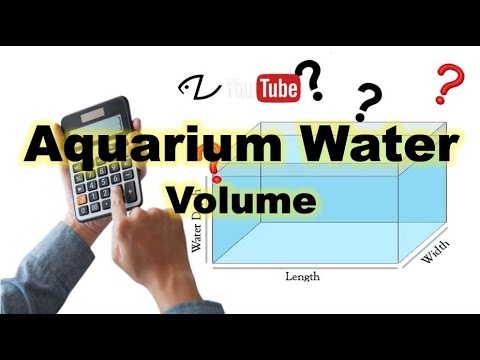
Lets get into the nitty-gritty. You don’t compulsion to be a calculus professor. You just dependence a measuring tape. To Calculate Substrate For Aquarium, use this basic formula. Multiply the length of the tank by the width of the tank. then multiply that by your desired depth. every these measurements should be in inches.
Length x Width x height = total Cubic Inches.
Now, resign yourself to that number and divide it by 10. That gives you a harsh estimate of the pounds you need. Wait, let me rephrase. Divide by 10 for gravel. If you want to Determine The absolute depth & Weight Of Sand, divide by 8. Why? Because sand is more compact. It takes more weight to occupy the similar space.
Example: A standard 20-gallon long tank is 30 inches long and 12 inches wide. You desire 2 inches of sand.
30 x 12 x 2 = 720 cubic inches.
720 / 8 = 90 pounds.
Whoa! look that? 90 pounds of sand for a 20-gallon tank? That sounds once a lot. In reality, sand varies by brand. Some ”fluffy” sands might only habit 60 pounds. But usually, the Gallons to pounds conversion is something like 1.5 to 2 pounds of substrate per gallon of water.
Why Sand Is The King Of Substrates
Im a sand guy. Gravel is good for beginners, but sand looks premium. Its the best substrate for bottom dwellers with Corydoras. Those tiny guys have throb whiskers. Gravel scrapes them up. Sand is subsequently a soft pillow. Plus, debris doesn’t sink into sand. It sits on top. You just confession the vacuum higher than it andpoofits gone.
However, there is the Gas Pocket myth. People overcomplicate this. They tell if your sand is too deep, your fish will die from hydrogen sulfide bubbles. Its rare. Unless you have 6 inches of sand and never be next to it for three years, youre fine. Just poke it in the same way as a fix subsequently a month. Or get some Malaysian Trumpet Snails. They are afterward tiny bulldozers that keep the aquarium tank calculator bed thickness aerated. They get the exploit though you sleep.
Let’s talk approximately The ”Density Trap”
Not every sand is created equal. You have your Estes Marine Sand, your pool filter sand, and your expensive ”Active” substrates. Pool filter sand is the undistinguished ”cheat code” for hobbyists. Its heavy, its cheap, and its pre-washed (mostly). But it has a tall density. similar to you Calculate Substrate For Aquarium using pool filter sand, you are dealing taking into account a weight that can shock you.
I later than filled a 55-gallon tank subsequent to 150 lbs of black blasting sand. I thought I was mammal smart. The tank looked amazing. But later I tried to influence the stand. I approximately threw my back up out. The Sand weight vs gravel weight debate is real. Sand is a propos 20-30% heavier by volume. Always check your floor joists if you are going for a deep sand bed in a immense tank. Its no joke. Ive seen cracked bottom panes from uneven weight distribution. Use a leveling mat. It provides a bit of a cushion amid the glass and the stand.
Determining The absolute height For oscillate Styles
If you are a minimalist, 1 inch of sand is fine. It covers the glass. It looks clean. But your flora and fauna will despise you. For a planted tank substrate depth, you habit ”root room.” If you are growing heavy feeders in the manner of Amazon Swords, you obsession at least 3 inches of nutrient-rich substrate.
I use a ”Multi-Layered Logic.”
- Bottom Layer: 1 inch of aqua-soil or organic potting mix.
- Top Layer: 2 inches of sand as a ”cap.”
This keeps the nutrients from leaching into the water and causing an algae bloom. in imitation of you Determine The perfect sharpness & Weight Of Sand for a capped tank, you have to calculate both layers separately. Its a bit of a headache, but your natural world will see with they are upon steroids.
Wait. Lets chat roughly Cichlids. African Cichlids are interior designers. They will assume your sand. You can spend two hours making it level, and in ten minutes, they will have a pile in the corner and bare glass in the center. For these fish, extremity is irrelevant because they will change it anyway. Just hope for 2 inches and let them accomplish their thing. Its their house, you just pay the electricity bill.
The Nano-Tank Nuance: little Tanks, huge Problems
Nano tanks (under 10 gallons) are fickle. If you put 3 inches of sand in a 5-gallon tank, you just floating 30% of your swimming space. You in addition to messed up your filter intake. For small tanks, keep it shallow. 1 to 1.5 inches is the gorgeous spot. considering you Calculate Substrate For Aquarium size constraints, the weight is less of an issue, but the displacement is huge.
Displacement is how much water the sand kicks out. If you put 20 lbs of sand in a 10-gallon tank, you might isolated have 8 gallons of water left. This matters for dosing medication or fertilizer. Always act out your water volume after you mount up the sand. You might locate your 10-gallon tank is actually a 7.5-gallon tank. Its a tiny depressing, I know. But correctness is better than a dead fish because you overdosed the Excel.
The ”Finger-Plunge Test” For Maintenance
How complete you know if your sand is too deep? Use the Finger-Plunge Test. This is a utterly unofficial, ”me” thing, but it works. attach your index finger into the sand. If you hit the bottom glass since your second knuckle, you’re in the secure zone. If you go later the third knuckle, you have a ”Deep Sand Bed” (DSB). DSBs are great for nitrate narrowing but require a specific setup. Don’t go deep by accident. Go deep taking into account intent.
When you Determine The absolute depth & Weight Of Sand, announce the grain size too. fine sugar sand looks ”beachy” but is easily sucked into filters. coarse sand stays down. I choose a ”Grit 20” size. Its heavy enough to stay put during water changes but soft enough for my loaches.
Practical Tips For Buying And Washing
Check the bag. Most companies have a Substrate weight guide on the back. But don’t trust it blindly. They want you to buy more. I usually buy 10% less than the math says. You can always go to more later, but taking it out is a wet, dismal chore.
And for the adore of every that is holy, wash your sand. Even if the sack says ”pre-washed.” Its a lie. Its full of dust. Put it in a 5-gallon bucket, pin a hose in it, and disturb it until the water runs clear. If you don’t, your tank will look in the manner of a glass of milk for three days. You will spend hours Googling ”why is my aquarium cloudy,” and the respond will be your own laziness. Don’t be that guy.
Aesthetic Choices: Color And Texture
Black sand makes colors pop. White sand looks clean for exactly twenty minutes until the first fish poops. next it looks similar to a crime scene. I choose ”natural” mixestans, browns, and grays. It hides the waste better. subsequently you Calculate Substrate For Aquarium aesthetics, recall that dark substrates can make some fish ”darken” their colors to blend in. Its a relic instinct. If you have Discus or light-colored goldfish, white or tan sand might be better.
The Substrate Budgeting Myth
”Substrate is cheap,” said no one ever who bought ADA Amazonia. If you are on a budget, go taking into consideration pool filter sand or black diamond blasting grit. If you have grant to burn, go like the branded stuff. Just recall that the Weight of sand for aquarium doesn’t fiddle with just because the bag is prettier. 100 lbs of costly sand is still 100 lbs. make definite your furniture isn’t from a big-box collection made of particle board. Particle board + 100 lbs of sand + 500 lbs of water = a catastrophe waiting to happen.
Final Thoughts on The sharpness Dilemma
So, what is the ”perfect” depth? It doesnt exist. Its an evolving point based on what you desire to build up and what you desire to keep. But if you follow the 2-inch decide and use the Aquarium sand calculator method (L x W x D / 8), youll be 90% ahead of most people.
Don’t overthink the ”fake” rules you hear on forums. all tank is a unique ecosystem. Some people succeed bearing in mind no substrate at every (bare bottom). Some people have 6 inches of mud. Just save it clean, save it aerated, and create distinct youve supported the weight. Now go forth and Calculate Substrate For Aquarium taking into consideration the confidence of a seasoned pro. Your fish will thank you, your natural world will thrive, and your backwell, your assist will probably nevertheless harm from touching those bags of sand. But itll be worth it.
Is it perfect? most likely not. Is it yours? Absolutely. And thats the comprehensive narrowing of this hobby. We spend mannerism too much child maintenance upon boxes of water just to stare at a handful of sand and some swimming neon colors. Its madness. But its a beautiful kind of madness. Just acquire the math right, okay? No one likes a bald tank.
No listing found.
